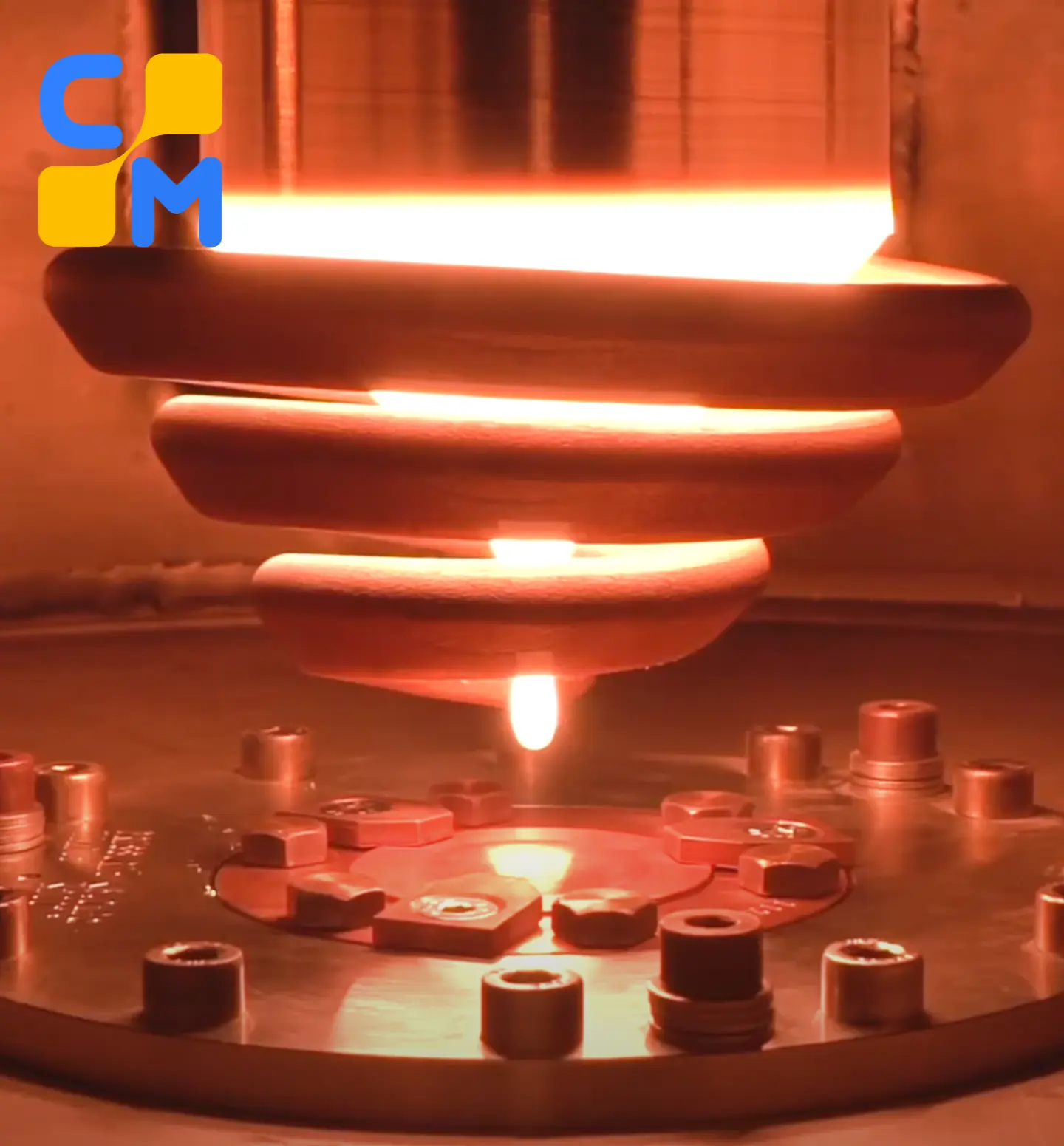
CERMET Feedstock – Engineering the Core of Powder Injection Molding
With over a decade of CIM and MIM manufacturing experience, CERMET focuses exclusively on feedstock development, delivering optimized material systems for advanced powder injection molding applications.

Raw Powder Materials
Choose powder +Debinding system

Mixing and Refining
Uniform dispersion binder system
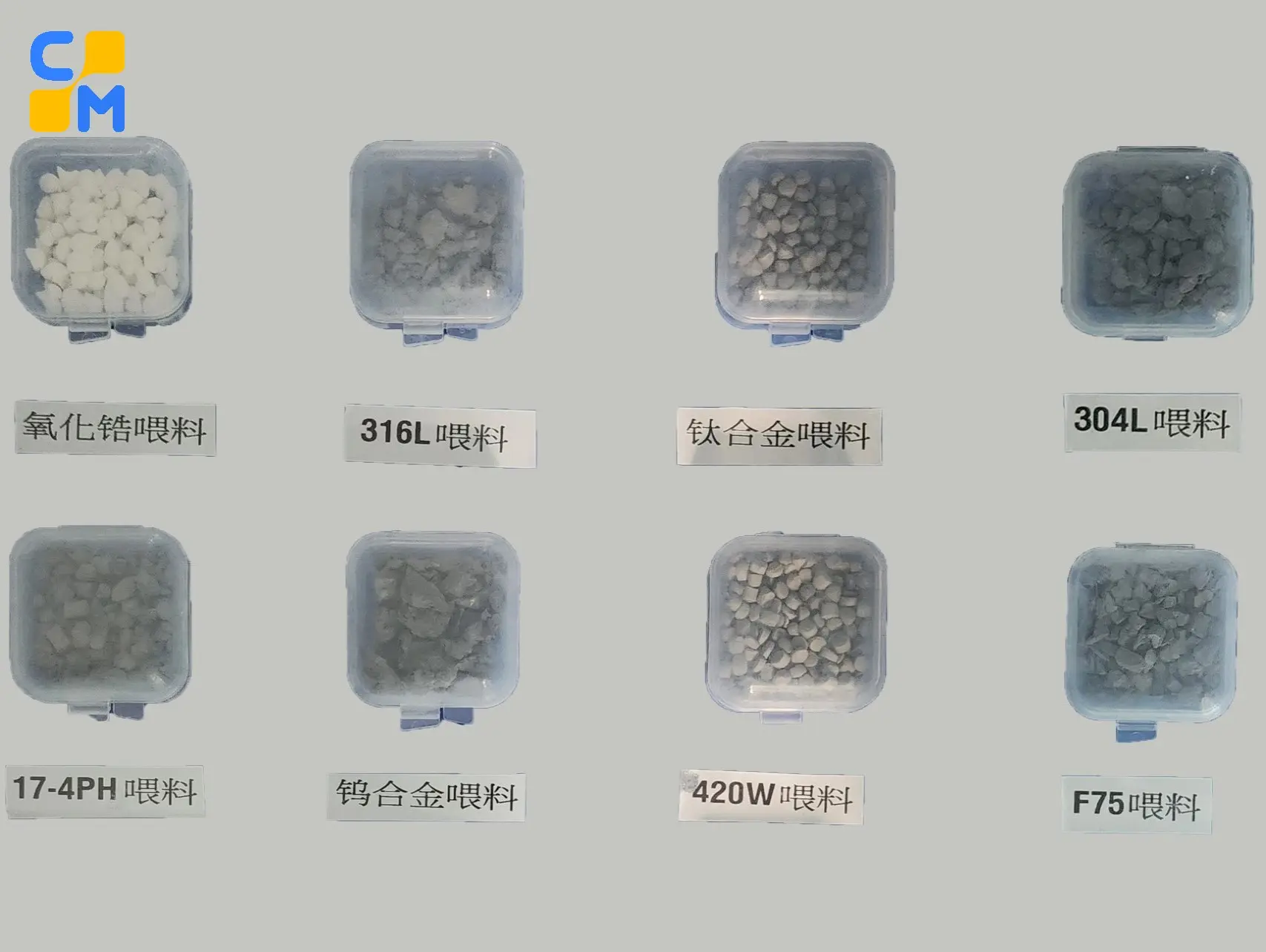
Feedstock Clumps
Establish a stable feedstock systems

Feedstocks Granulation
Standard and non-standard particle delivery
CERMET's Core Technology & Process Optimization
Material formulation engineering · Dimensional shrinkage control · Debinding process development · Sintering process optimization
IM Forming
Debinding
Sintering
Post-Processing
Surface Treat
Final Delivery
CERMET offers customized feedstock formulation development and process parameter optimization to meet specific customer application requirements across a wide range of material systems.

Feedstock – Customer-Oriented Custom Delivery
From powder selection and formulation design to mass production, CERMET leverages over a decade of PIM feedstock development experience to deliver precise and reliable manufacturing solutions tailored to customer requirements.

Feedstock Quality & Process Compatibility
Our feedstocks are engineered not only for material performance, but also for compatibility with diverse geometries, dimensions, and process requirements, enabling reliable manufacturing of complex components.

Feedstock Application Support
Reliable Manufacturing Enablement- Supported by CERMET's large DOE-based feedstock database, all formulations are validated in production environments to ensure reliable performance from prototyping to mass production.
Equipment Overview – Ensuring Consistent Feedstock Quality
CERMET operates a fully integrated quality control system for CIM and MIM feedstocks, from raw material preparation and compounding to pelletizing and analytical testing, ensuring stable, traceable, and consistent production quality.

Powder Characterization Equipment
Our analytical laboratory is equipped with advanced precision instruments and monitoring technologies for strict quality control of raw powder materials. This ensures a stable foundation for feedstock formulation compatibility, process reliability, and molding performance.

Powder Raw Material Batch Consistency Testing
Our quality control and technical analysis department is equipped with advanced testing systems for powder analysis, particle size distribution measurement, impurity content evaluation, and performance verification. These capabilities ensure full-process validation of critical parameters for PIM materials.

Powder Raw Material Batch Consistency Testing
Our quality control and technical analysis department is equipped with advanced testing systems for powder analysis, particle size distribution measurement, impurity content evaluation, and performance verification. These capabilities ensure full-process validation of critical parameters for PIM materials.
Feedstock Quality Assurance System from Manufacturing to Validation
Through systematic inspection and both quantitative and qualitative data analysis, each batch of feedstock is ensured to deliver stable flow behavior, excellent molding performance, and reliable sintering quality.


Particle D90 Distribution

DSC / TGA Analysis

Debinding Evaluation

Microstructure Analysis

Feedstock Inspection

Rheological Evaluation

Binder Systems
In the early development stage, CERMET collaborated with materials engineering team to develop a series of modified binder systems for ceramic and metal injection molding. These systems are specifically designed for advanced ceramic injection molding (CIM) processes and are compatible with a wide range of powder materials, including oxides, nitrides, carbides, and functional ceramics, providing a stable and efficient foundation for feedstock development. Binder system is a specialized formulation for nano-scale ceramic powder CIM applications. It is composed of curing agents, accelerators, dispersants, stabilizers, toughening agents, and multiple polymers with functional additives. The system offers excellent powder wettability, high flowability, low ash residue, and outstanding dimensional stability, effectively reducing cracking, delamination, and sintering distortion while improving overall yield.
Improved powder packing, reduced surface defects, and enhanced filling performance for thin-wall and complex structures. High debinding efficiency, low residual ash, wide processing window, and stable mechanical performance under thermal cycling.Tailored binder systems compatible with catalytic, thermal, and solvent debinding processes for diverse material and equipment requirements. High compatibility with diverse binder systems and powder types. Prevents agglomeration and segregation, ensuring uniform dispersion and stable dimensional performance.